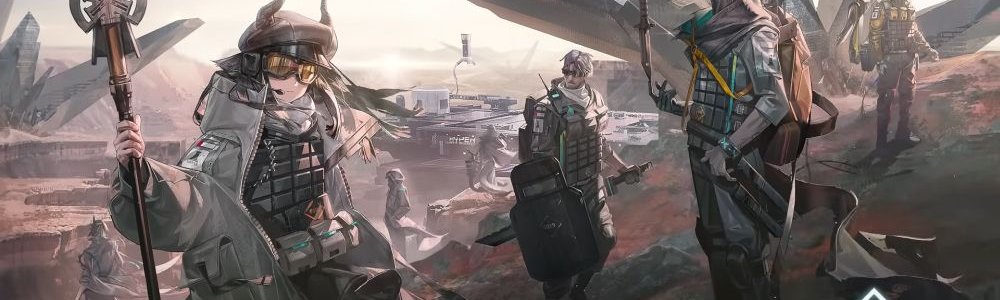
"Fantasy" and "science fiction" are so intertwined they're not even two sides of the same coin, they're all the same side of a carved seal cylinder. If you use the carving like a stamp, and roll the cylinder along a surface, you'll see science fiction drawn on one end and fantasy on the other. On that flat surface they look far apart, but in the cylinder itself, they're next to each other.
I just started reading Ted Chiang's Stories of Your Life and Others. A couple of days ago a friend asked me if I know any good contemporary science fiction apart from the old classic. She also mentioned how science fiction tends to rub her the wrong way because when she try to see how it fit with real life science, the whole story falls apart. Had I've already been reading Chiang then, I would have yelled his name at the top of my lungs.
Science is in essence, a way to see and appreciate the world in all its intertwining elements. The laws of gravity is just a way to connect the dots between the fall of an apple and the ground under all of our feet. As the world is vast and filled with a near-infinite number of things, perceived by millions of different minds, science is applied into different branches. Physics, biology, chemistry: branches of science. You know what else is branches of science? Sociology, psychology, history, and if you'd allow me to toot my own horn, even politics and economy.
It's impossible for a single human mind to understand every branches at once. We specialize, or we generalize. Whichever it was we couldn't understand everything at once. And the stories we write follow after us: they specialize, or they generalize, they could not tell everything at once. The stories we know as science fiction, too, only magnify a section of science, and elaborate on it.
But fantasy is often no different. They take place in a different world, with different people running it, different societies, different systems in which people interact with each other. Lo and behold, fantasy are also about science, just of a different sort. Instead of mulling on the engineering of a time machine and the physical curvatures of space, they focus instead on how a society of fire starters would work, how a kingdom ruled by the worship of living dragons would function.
[Minor spoiler warning]
The titular story in this collection of short stories, "Story of Your Life" tells of an alien whose understanding of time is not linear, as if they could see the future as well as they remember the past. I find it oddly familiar: I'm currently making a fantasy story about a child, the son of powerful wizards, who had an innate knowledge of time and space because of the quasi-magical circumstances of his birth. As a child, he was always calm, he was never surprised, he never cried. As if he already know everything that would happen to him.
The thing that made "Story of Your Life" classified as science fiction is exactly what made my story classified as fantasy, they just have different dressing. As the former go at length of the cause and result from a linguistic and physics perspective, the latter would sidestep those and, as a result, put more focus on the psychological and societal effects. They're both scientific, in a way. They look at new phenomenons with the good old lenses of science.
Any sufficiently advanced technology is indistinguishable from magic.
(Clarke's Third Law)
It never really matters what the technology/magic is. It's how it changes the world around it that matters.