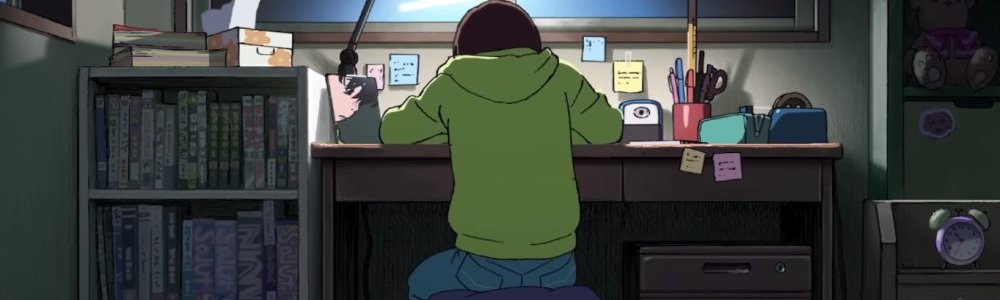
I went into the theater to watch Look Back (2024) expecting absolutely nothing. I went out of it crying. There's something about it that really digs into what it's like to be an artist, to dedicate yourself to creative endeavors. If you've got the chance to watch it, please do so. It's worth it.
Alright, that said, I want to talk about some spoiler-territory part of the movie, spurred by this dumbass review. Watch the movie first before reading!

"I honestly don't get the reason Kyomoto died" this feels like this tells more about the reviewer than the movie.
The reason Kyomoto died is because Kyomoto died. Death is something that comes unexpected. It can feel like your story has just begun and then it's all cut short anyway. That is what death is, and that's what I think half of the movie is about. If you can't see that then I think you're just in denial or having trouble processing the grief that comes with that.
Fujino is honestly kind of a dick. She sometimes treated Kyomoto like a footstool. In an alternate universe, she'd curtail Kyomoto's passion in favor of her own ambition. But she recognizes these flaws within her; why else would she finally let Kyomoto go to university and chase her own passion? She probably has a thousand apologies held back in her heart, waiting for the right time to say to Kyomoto because deep inside she truly does love her, as Kyomoto loves her back.
But none of those apologies found their way out because then Kyomoto died, and then what else could she do? Grief is the regrets of things unsaid.
Grief is also the longing for ambitions unfulfilled. The movie was built up as this feel-good story of two artists, how their path diverge, and how, if things go well, they find each other again. The way death cuts into that structure, sharp and uncaring, is in a lot of ways like death in real life. It's sudden and it feels "unnecessary". What is all that setup, all that effort for? No matter the answer you can find for yourself, you'd still have to move on.
The part of the movie that I find a little more confusing is the "alternate reality" where Kyomoto and Fujino never met, borne out of Fujino blaming herself from ever meeting Kyomoto. If she'd never taken Kyomoto out of her room and become a manga artist with her, she thought, then maybe she wouldn't have gone down this path that leads to her death. In a way this alternate reality reflects her arrogance: even without Fujino, Kyomoto still became an artist. She still went to university to study art. The tragedy would have happened anyway. Except this time, Fujino happened to pass by and saved her. This point, I don't understand. A little wish-fulfillment? A little treat for the viewer? Or do they just want to highlight the unpredictability of fate? Is this merely a story that grows in Fujino mind?
Whatever paths could have been, the reality is that Kyomoto died and it was up to Fujino to continue the path of an artist that she was treading. After all, she and Kyomoto had part ways apart a while ago and she'd already figured out how to work with that. Nothing changes for her, materially, only that she knows now there will be no reunion down the line, nowhere for the apologies in her heart to find a home. She still has to move on.