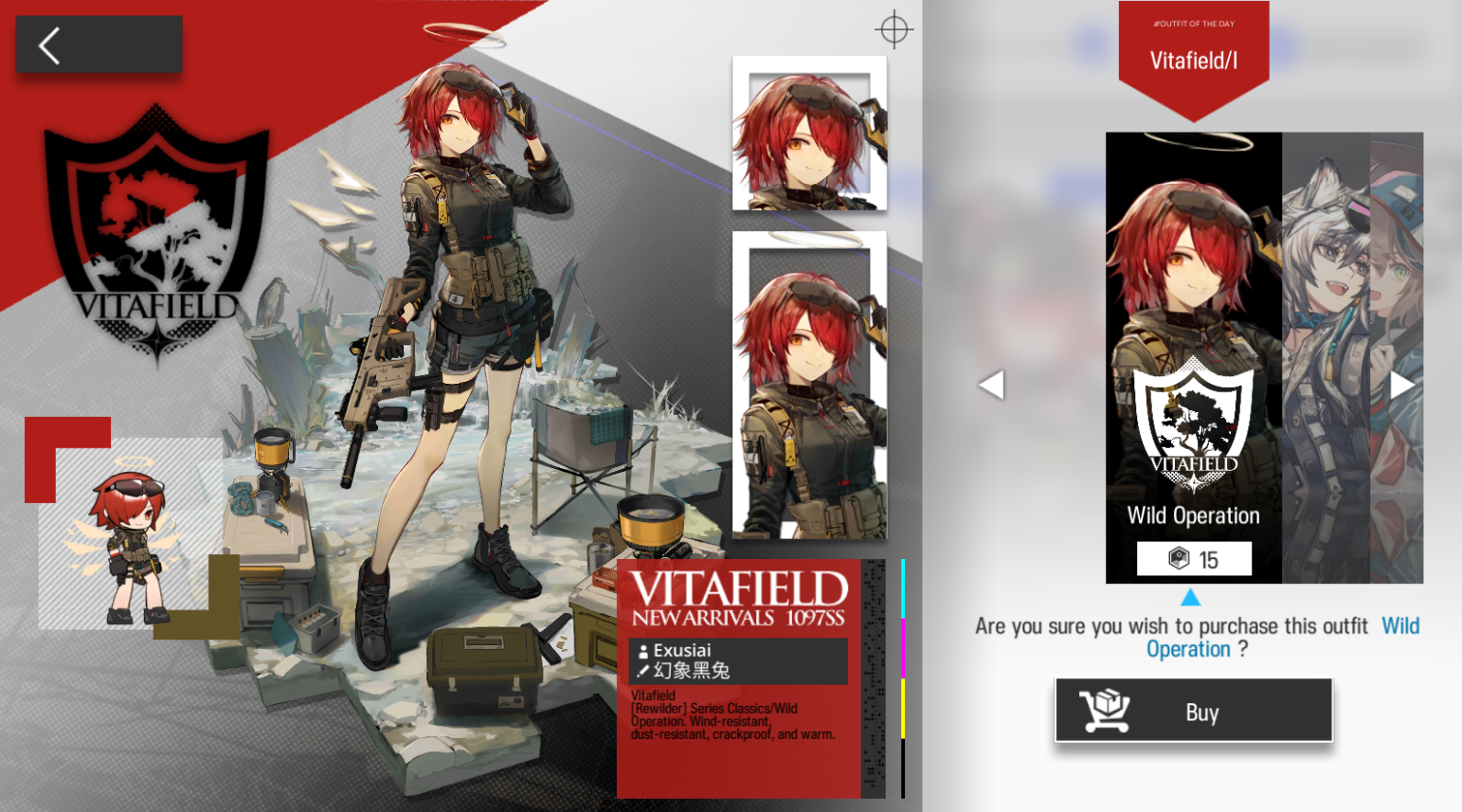
(Not sure what image I should put on this blog post, so here's my current white whale, Exusiai from Arknights)
Gonna preface this by saying I'm not an expert or anything, but I've regularly played at least four gacha games (Otogi, Fire Emblem Heroes, Genshin Impact, Arknights, Sdorica too for a bit) and have been keeping up with friends who play a few more, so I think I know how to handle them. Gacha games are fun, truly! They're just fun in a slightly different different way than other, more conventional, games.
So a quick definition, first. A "gacha game" has a few key characteristics: 1) It is constantly updated with new content (or in other words, it's a live service game), 2) Its main gameplay consist of utilizing different characters / equipments, and the number of playable characters / equipments increases with every new update, 3) The main way to gain new characters / equipments is by throwing in-game currency and getting randomized result. This throw-currency-get-random-character is usually called "pulling".
Some of the fun of gacha games lie in collecting these new characters. Collecting is what the genre was first established for, after all. But the only good gacha games—the ones that managed to survive their first few years—are also those with solid gameplay. Most gacha games are made for mobile and meant to be played by busy people during their commute, so they tend to be simple and replayable. A few more recent games, though—most prominently Genshin Impact—are solid whole games on their own that can match any premium games.
Gacha games are typically free to play, with options for buying in-game currencies with real life money. Most of these currencies are used to pull for new characters, but they can also be used to buy cosmetic upgrades and the likes. Some also have monthly subscriptions that give extra perks. Monetization in the free-to-play zone can be very sophisticated these days, it will be unfair to reduce it to "gambling" or "predatory". There's no ethical consumption under capitalism, after all.
Anyway. This is a blog post about playing the game, not an academic overview of what gacha games are. So:
Tip #1: Gacha games are long-term games. Take your time
Some games, like arcade games, you can have a lot of fun with in one sitting and then never touch them again. Gacha games are the opposite of that. You will never understand these games in just one sitting. The core gameplay might be simple, but there will likely be lots of interlocking systems underneath all that,this before mentioning all the new features and content added over time. These are games that constantly evolve and expect you to be here for the long haul.
But it also expects you to take things slowly. I did mention that these games are usually meant to be played by busy people on their commute, right? At their most casual, gacha games are like, 5-minutes-a-day affair, to be played over months. Many of them feature free rewards just for checking in daily and doing low-energy actions. It's a build-up-over-time sort of thing. You can't experience all the content in one go.
Most of these games also implement a "stamina" system, where once you've ran out, you can't do specific actions anymore. A cynic might say this is a predatory system meant to get you to pay cash to restore that stamina, but in any of the decent games, the stamina system is here to help you. It's here so you don't get too absorbed playing the game... Once you've ran out of stamina, well, maybe it's time to take a break? The game will still be here when you check in tomorrow.
Tip #2: Don't worry about pulling for new characters when you're just starting out
This is VERY important. Most gacha games will push you to pull for new characters with phrases like "First ten pulls FREE", but you might want to hold out for a bit. As I mentioned before, gacha games tend to have multiple interconnected systems. Any one of these systems can contribute to your ability to pull new characters. For your first few days of playing, you should just get used to all these systems, get to know which currencies are used for what, and which part of the game is the most fun for you.
Most gacha games have a reliable way of making currency-used-for-pulling over time. In Genshin, for example, it's the "Primogem" which you get from doing the main quests, daily quests, and limited time events. In Fire Emblem Heroes, it's the "Orbs" which you can get from daily login, story battles, and some specific quests. Once you've figured the whole currency business out—like how much of those you can get by playing daily—you can make decisions about when to pull and when not to. If there's a character you really want, for example, you might want to save up until they're available.
Different gacha games also treat their character-collecting aspect differently. Fire Emblem Heroes, for example, has one bajillion characters and you have many many opportunities to pull for them. Part of the fun is just collecting them like you would a stamp collection. Genshin Impact, on the other hand, only has a few character and very stingy with how often you can get them. Each character can have very different playstyle too. So it's a game less about collection, and more about getting to know the ones you manage to have. It's best if you can figure this out before deciding to pull.
Tip #3: Don't pay attention to game updates yet
Starting a new gacha game will be overwhelming enough. Following their updates on social media, all the limited-time events, and keeping up with the evolving story will be difficult. Throw that FOMO away. Just enjoy the game at your own pace. Follow the in-game tutorial. Follow the starting story quests or whatever the game has to offer. Completely ignore whatever limited-time event is going on. Limited-time events are usually not for newcomers, they're for veterans of the game who has played through all the permanent gameplay features.
Tip #4: Make the best of what you get, don't pine for something different
A core point of gacha games is that many of the things you get are randomized. There might be a character you really want, but there's no guarantee you're going to get them easily, or even at all. So banish that desire. Live with the chaos. Whatever character or equipments you managed to pull, use them to the best of your ability. Learn to love that weirdo you pulled. They might just be your new favourite.
A core part of gacha games is that a large part of your experience is randomized. It also means that no two players experience the game exactly the same. Cherish that. Cherish your first "rare" character. Cherish the lower rarity character you learned to build into behemoths. Cherish the experience of getting there. Gacha games are games about building things up over time, little by little.

Tip #5: Spend money to support the game, not because you pine for something different. Spend responsibly!
Listen. Gacha games are not gambling, but they can be, and the only difference can be as thin as your perspective on it.
Before spending a dime on gacha games, or really any game, think first: are you having fun with it? Would you like the people who made the game to continue working on the game? Also think: are these money you can afford to spend on frivolous things that's not strictly necessary (but nevertheless can make you—or has made you—happy)?
Paying for gacha games helps support the game's developers and the ecosystem of people who help keep the game alive, so it's not a shameful thing to do. You're also not getting tangible materials in return, so I would not call it gambling, per se. But, thanks to the get-random-rewards mechanic, gacha games can trigger the parts of your brain the same dangerous way gambling can.
So like, be careful, watch your spending, control your desire. Only give the game as money as you think the game is already worth to you, not for the reward you might get. If you manage to get what you want because of your extra spending, cool! If you don't get anything you want, that's fine. Things build up over time.
Addendum: Predatory practices
Ok. Listen. We live in a capitalist society, which means no matter what we want to do in life—whether you want to dedicate your life to helping others or just to have a peaceful life or to create something meaningful for the world to see—we're also constantly held back by the need to earn enough money to survive. Business are created first of all to facilitate that need, and game companies are businesses.
Businesses are not your friend, but they do provide a service, and to take advantage of that service you have to give them money somehow. Gacha games, and all free-to-play games, are businesses. It's just that they way you pay them can be circular. You might never pay a dime, but you might then talk about the game to friends who then play it and then buy something in the game, or maybe by playing you're giving the developers more statistics and ideas of how the game can be more fun and reach more people, and then those people, at some point, buy something in the game. There might be a hundred players who can't afford to spend a dollar for the game, but just by being there, they might get that one person who can afford 100 dollars a month.
So figuring out the system of monetization that's suitable for a free-to-play game is astoundingly difficult. There are often accusations of how free-to-play games are designed to take money out of you, but the truth is it's all a difficult balancing act. Make the game too fun without anyone spending a dime, and you don't have a business. Make the game impossible to enjoy without spending a dime and, whoops, you should have made it a premium game in the first place. Maybe then you won't upset the hundreds of players who went in with the wrong expectation.
There are certainly parts of gacha games that are predatory, the random-reward-triggering-gambling-brain thing being the most obvious one. However, any good self-respecting game companies (and, frankly, any good self-respecting government who can impose regulation) would limit that, if not out of the goodness of their heart, then simply because such practice are unsustainable. You don't want your game mentioned in a headline like "Florida man spent their entire life savings on [game] without realizing it". You don't want words on the street saying your game is bad for people's health. You want them instead to say "hey, give this game a try, it's fun and it's free".
Living in a capitalist society is always a balancing act.
Conclusion
Gacha games are fun, and part of the fun, at least for me, is how differently they feel to more conventional games. Some games I play for the experience, like going to a movie or reading a book, to enjoy them for the moment and then maybe having them linger in my mind afterwards. Gacha games—and I imagine this is true for many live-service games—are like, little homes I come back to everyday, little hangout spaces, a cafe you might stop over everyday after you're done with work. It's comfortable in its familiarity, but sometimes it'll change, the cafe owner installing new lighting or getting new kinds of coffee beans, but that's just part of the fun. Of things changing over time.
It's also like, like building a mountain. Like nurturing a garden. Everyday you check in and maybe not do much. Maybe you just water the plants or add more dirt to the mountain, some pleasant acts. But after a while, they grow and thrive. Things build up.